Finding light in the dark

ghosts

‘Six months is nothing’, they said. ‘When you come back, everything will be exactly the same.’

March 2016 was easily one of the happiest times of my whole life. I was in the Philippines, my boyfriend proposed. I was so tanned, so healthy and had absolutely everything to look forward to.

In April, everything changed. Well, not everything. One thing changed enough to make all the good things look different. Once upon a time I would have seen this as a sign that maybe I didn’t deserve to be as happy as I was. Now, I simply refuse to feel sorry for myself. What good can it possibly do? I still have all of those wonderful things (apart from maybe the tan). It’s so important (and often so bloody difficult) to focus on what we’ve been blessed with, rather than fixate on the negatives.

I wrote this post to comfort others as much as myself. Because sometimes terrible things happen. And the only way to make them less so, is to find the strength to interpret them in a positive way. A while back, I made a decision to have faith in the world around me no matter what, so I really have no other choice.

It’s something I worried about over again and again, without ever truly believing it would happen. That I would receive that heartbreaking phone call when so very far from home. Losing someone is never, ever easy, but finding out when I was minutes away from boarding a plane from Kuala Lumpur to Japan is one of the most painful experiences of my life.

What happens when you’ve assigned a limited amount of time and all of your money to fulfilling your dreams, and something happens to make you wonder why you ever wanted to be away from home at all? Because everything you really care about is a million miles away. You can plan every detail of your life six months in advance, only to find out repeatedly that you will never have full control. On 8th April 2016, my wonderful grandad died, and we made the decision to fly home.

Although I could talk forever about the strength of my family, or the beautiful send off we gave him, what I want to share is the light I’ve managed to salvage from the dark. That even though I’ve lost someone too soon and my family are suffering, I will not crawl into a corner, angry and afraid. I will be strong for them and for myself. Because that is the least we can do for the people we love.

There is so much hope to be found when it’s least expected, if only we discipline our minds and hearts enough to find it. Death is the only reason our lives mean anything, and grief teaches us so much about love. I said this in another post about death; that being prepared to grieve for someone is the same as being prepared to die for someone. They are the bravest declarations of love we can make. They prove that you believe in something much bigger than the constrains of life and death.

Be open to the possibility of a force affecting the order of things, and you’ll realise how much you want it to be true. If a bird of prey circles my head the day my grandad dies, and then again, in a different country, the day of his funeral. I will believe it means something. I don’t care if it’s just a coincidence, because I believe enough to make it true to me. I found something lovely in something very sad, and that means I know I’ll be ok.

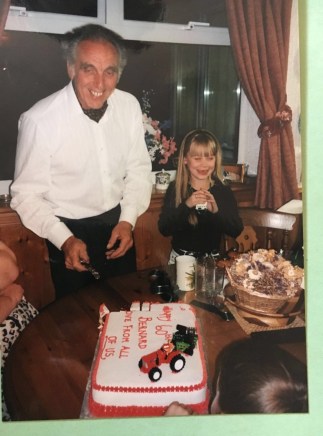
In fact, lots of my family members experienced weird and comforting coincidences around my grandad’s death. He had dementia, but knew everyone’s names and played the harmonica during his last days. I even spoke to him on Skype. I keep seeing the Ferguson tractor he had and was handed free samples of his favourite drink (Baileys) at a food festival. It doesn’t matter that I’m probably just more tuned into these things now he’s all I can think about. All that matters is that my grandad’s death is shrouded in meaning. There is so much comfort to be found in that small, simple fact. That a random case of life and death has so much definition and significance in the minds of the people who loved that person. People live forever with us that way.

‘The ghosts of the people we love live inside of us, and like that we keep them alive.’

So it will probably come as no surprise that even though our money pot is dwindling and our plans have gone completely out of the window, we’ll be flying back to Asia tomorrow, having spent two weeks at home. Determined to finish our travels on a positive, and to continue to have faith in life, we’ll be spending the next couple of months in Northern Thailand and Vietnam, before volunteering on an organic farm in Spain. Because if there’s one thing death teaches you, it’s that you only have one chance to tick all those things off your list. Just one.

I was so fortunate to have known my grandad for 26 years, and will remember him by continuing to make the best possible memories I can for myself and my family, just like he always did for us. Having a positive reaction to a negative thing is really fucking hard, but I hope this story inspires you to be brave enough to do the same.

FullSizeRender(23)

Where to go in the Philippines

img_5424-1

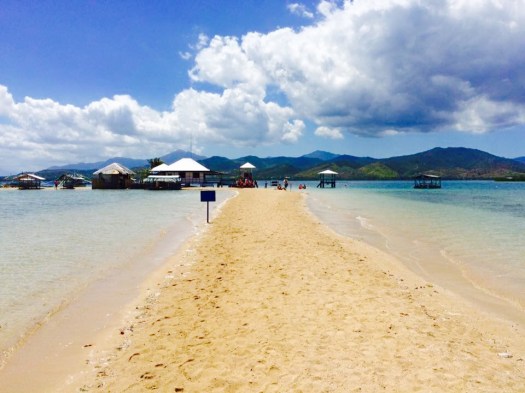
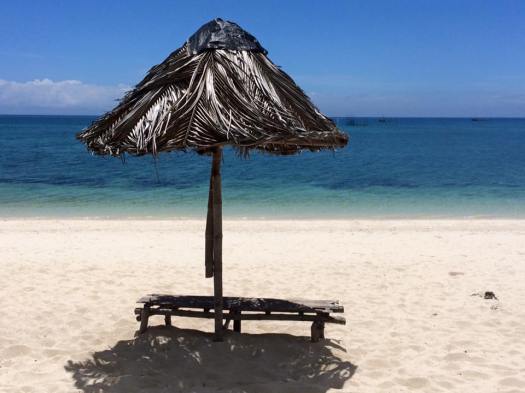
Despite the English-speaking natives and famous white-sand beaches, the Philippines still hasn’t quite found its way onto the typical travellers’ route. This is a good thing. Spanning over thousands of islands, there is still so much untouched, untainted paradise to discover. As with all less-trodden paths however, navigation and knowing what to expect is still a little harder to grasp than tourist-friendly Thailand. Planning a trip to the Philippines demands time and research, but I promise it will pay off in the end. Whatever you’re searching for, whether its the chance to experience traditional village life, see some of the most beautiful beaches in the world, be amongst a buzzing crowd of inquisitive tourists or find a secluded island of your own, this fast-rising country has more than your imagination is capable of. I was lucky enough to spend a month there, so here’s my recommendation of where to visit and why.

 
CEBU CITY
1361-lorega-cebu-city likehertype

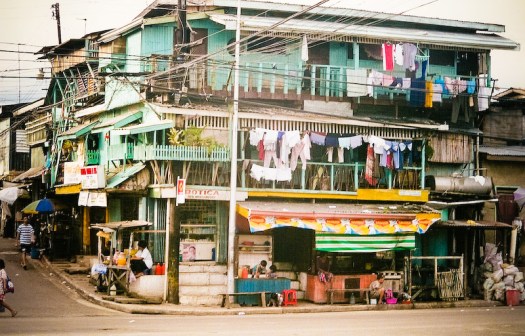
We flew from Singapore to Cebu in order to make our way through the mainland and up to the islands of Bantayan and Malapascua. We stopped over in Cebu City for the night and despite appearances (chaotic roads and concrete slums), we had the best evening at what looked like a seedy bar and turned out to be the best live cover band I’ve ever heard, at El Gecko Bar.

We stayed at Tropical Hostel, which was amazing value with really lovely staff.

BANTAYAN
DSC_0158

The very epitome of traditional island life, Bantayan is yet to succumb to mass tourism despite offering the most incredible beaches. We paid a tricycle driver to take us to ‘Paradise Beach’, which we had entirely to ourselves, and ‘Virgin Island’ which is another level of perfection, a short boat journey away. We bought fish from the local market which our boat driver prepared for lunch. The town, Santa Fe, comprises a few narrow streets of shops, food stalls and bars hidden beneath rows of Palm trees and pink flowers. It is such beautiful island.

We stayed at Sunday Flower Resort, which is right on the beach and feels like you’re living among the locals rather than staying as a guest.

MALAPASCUA
DSC_0139

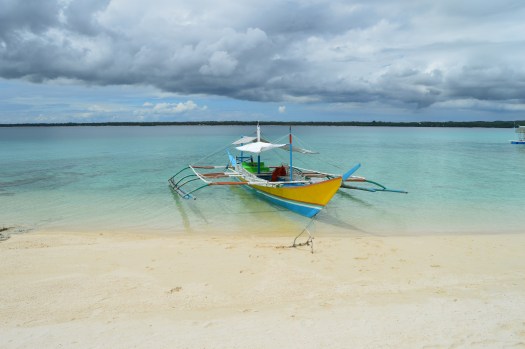
We took a tiny boat that had no seats and kept filling up with water from Bantayan to Malapascua. It was terrifying and took 3 hours but is so much quicker than going back to the mainland to get the ferry. The water is really calm in March, otherwise I would have chosen the longer route! Malapascua is a tiny island with pure-white sand and incredible mountain views, built up solely for diving. The strip of dive centres doubles as beach-front restaurants, bars and hotels. We did a day trip with Evolution Divers, who have the biggest boat, and saw sharks, sea snakes and sea horses.

We stayed at Blue Corals, which has its own sunset bar out to sea and a private sun loungers on the beach. Although, we did have to shower using a bucket!


KANDAYA
DSC_0178

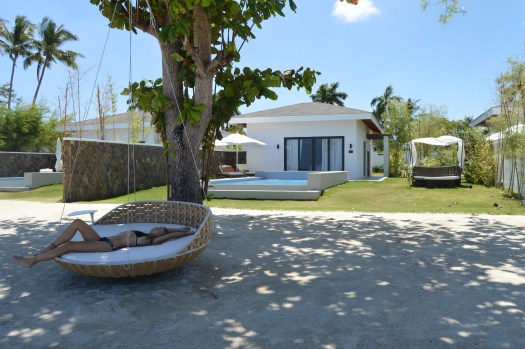
Kandaya isn’t an island or region in the Philippines, it’s a luxury resort on the northern coast of Cebu. It isn’t cheap, but it is the perfect option for a very special occasion. Joe proposed to me here, and it will forever be my ‘happy place’. Think ultra-modern villas on the beach, private infinity pools, horse stables, golf carts to ferry you about and a absolute tranquility.

BOHOL
DSC_0321

Bohol is famous for two things: Chocolate Hills and Tarsias.  Chocolate Hills is a unique formation of huge coral-rock hills covered green grass that turns brown in the dry season, resembling a box of chocolates as far as the eye can see. Tarsias are the world’s tiniest primate and can only be found in Bohol. You can easily see both and much more in a one-day tour. I would also suggest the river cruise for lunch and Panglao’s lively Alona Beach for dinner and drinks.

We stayed at Villa Juana, just down from Alona Beach, and the hosts were so friendly. They drove us around to see the sights, feeding us sweets and satsumas.


PEURTO PRINCESA
FullSizeRender(22)

We flew to Manila to meet friends that had travelled all the way from the UK to meet us (that’s love) and the next day took another flight to Palawan. Peurto Princesa is the capital and is worth sticking around for before doing what most people do and heading up to El Nido. We did the Honda Bay island hopping tour which was amazing. Snorkelling, a beautiful sand bar, BBQ lunch and a pristine white beach (with added banana boat ride) to finish. We also did the underwater-river tour, which is astounding  to see but very touristy and long-winded as a day trip. Head down to Rizal Avenue or The Bay Walk for dinner (we loved La Terrasse).

We stayed at Julieta’s Pension House, and Julieta herself was the loveliest lady. We also stayed at the Acacia Tree when we passed back through, which is a beautiful hotel with a pool and clean, comfy, modern rooms. Probably my favourite hotel in the 4 months I’ve been travelling.

 
EL NIDO
DSC_0450

Located in the north of Palawan, El Nido has a reputation as one of the most beautiful places in the Philippines. The rumours are true. It’s stunning, and although busy, it’s also a lot less built up than I thought. A traveller’s paradise. The best beaches are off the mainland, so you’re completely dependant on sorting a boat for the day. We skipped the crowded tours and found a really lovely couple (Tom and Maddie who run Pink Pirate) that would take a different route to avoid the crowds. We were rewarded with having El Nido’s infamous ‘Big Lagoon’ to ourselves, dropping anchor right in the heart of it for a BBQ on the boat. Las Cabanas Beach is on the mainland, and has wonderful views of the Bacuit Archipelago (surrounding islands). It’s also home to a couple of beach bars with surprisingly good music, snacks and cocktails. The best thing about El Nido? The sunset. Grab a table and some tapas early doors at Republika Sunset Bar, or sea kayak your way across the horizon.

We stayed at Islandfront, which was right on Corong Corong beach and a short tricycle from Las Cabanas and El Nido Town. The views are incredible, which just about makes up for the lack of running water. We really embraced ‘island life’ here, and then we all got sick. So worth it though.

12795442_10156533067605858_4121685732223197029_n

If you’d like more information about any of the places we visited in the Philippines, please don’t hesitate to comment below!


Giving up makeup (more or less)

no makeup double

Four months ago, the night before my flight to Bangkok, my sister helpfully went through my backpack in an attempt to reduce its embarrassing size. I’m proud to say that I agreed to leave a pile of clothes behind, but after bulk-buying my favourite beauty products for my six-month trip, I struggled with the idea of being without my lifeline: foundation.

“You’re taking two full bottles of foundation, four pressed powders and how many bronzers?!” she demanded in confusion.

“I don’t want to run out..”

Actually, I was terrified of not being able to buy my favourite and trusted brands abroad. It hadn’t really occurred to me in a serious way that I might turn my back on them altogether. That I would finally let my skin properly breathe for the first time in years. That my skin would behave normally of it’s own accord, without smoke and mirrors, if only I’d just let it.

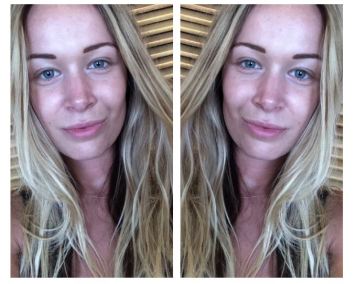
A while back, I wrote a post about feeling comfortable in your own skin, detailing my experience with acne as a teenager and the affect it can have on your confidence. In the past, I’ve put a huge amount of pressure on myself to look ‘perfect’ all the time. I hoped from the bottom of my heart that travelling would help me confront my dependency on makeup, but in all honesty I never really believed I would be happy looking at barefaced me in the mirror. Now it feels weird to think that I never used to leave the house without a thick layer of high-coverage foundation. No wonder my skin was so unpredictable.

OLD MAKEUP ROUTINE:

Primer > concealer > foundation > pressed powder > loose powder > bronzer > blusher > various eye shadows > eye liner> mascara > eyebrow pencil > lipstick

Which is a fairly typical daily concoction for a lot of us. The result? Your face purposefully looking completely different. I’ve only recently come to realise what a shame that is. That so many of us want to look nothing like ourselves. I’m not sure at what point I started wanting to hide my normal face, but it was a very long time ago. It wasn’t enough that my boyfriend professed how ‘beautiful’ I am without makeup. Why wouldn’t I want to look better if I could? Even when it meant getting up at the crack of dawn to apply my face, spending a small fortune on products and feeling strange and ugly without them. Beauty is an addiction. So many of us have become obsessed with our own faces. Only now I’ve taken a step away from my old life do I realise how much time I was spending trying to make myself look ‘right’. And for who? Do people really notice or care if you’re not wearing a full face of makeup?

Those of us who wear makeup every day tend to have a fairly psychological relationship with it. Before, if I didn’t wear makeup, I didn’t feel like me. I felt as though I was being lazy, akin with not bothering to get dressed. Which, when you think about it, is completely ridiculous. It’s just my face. It’s nice to look nice, and I will always make an effort with my appearance, but nobody should feel like a slave to their makeup bags every single day. Nobody should feel less like themselves just because they’re not wearing mascara. It’s hard to think that way when you wear makeup every day. Which is why I’m so glad I’ve learned to like my face again.

So how did I do it?

Quite simply, makeup and travelling do not sit well together. You live out of one bag, you’re always on the go, you’re active, you have to be practical, you’re often sweating, swimming or in the rain, and there are 100 more interesting things to be looking at than your face in the mirror. I am so very glad that travelling forced me to stop feeling so dependent on makeup, I just wished I’d realised all this at home years ago.

I reluctantly gave up foundation first. Thailand’s humidity made sure of that. At first I felt hard-done by, moaning that even my expensive foundation was melting right off my face. Pretty soon however, it became a blessing. My morning routine was so much quicker. I felt self-conscious about spots and dark circles under my eyes, but my skin soon responded by being less shiny. I persevered despite feeling uncomfortable and pretty soon I wondered why I’d ever worn foundation at all. My skin could breathe.

Next came mascara. The longer I went without wearing mascara, the more I came to like my natural eye shape and long blonde eye lashes.  A few weeks in and I was going about each day without any eye makeup at all and feeling completely normal. It sounds ridiculous, but I honestly never thought I would be able to do that. I’m actually quite ashamed at how much I used to hide my face. There’s nothing wrong with it. I just convinced myself there was thanks to an ongoing obsession with thinking I should be looking a certain way, to please nobody but myself.

CURRENT MAKEUP ROUTINE:

primer > powder > eyebrow pencil

Giving up makeup is like giving up any addiction; you absolutely have to be in the right frame of mind to be able to do it, and you’ll surprise yourself by how much better you feel without it. You’ll wonder why you ever depended on it so much and how it could possibly form such a big part of your identity, your confidence, your ability to go about your day.

I can’t help but think that with the new obsession with contouring, beauty filters and lip fillers, we’re not used to seeing natural faces any more. If we all give in, we’re in danger of all morphing into the same person. I’m not sure who she is, or why so many of us want to look like her, but she exists as nothing but a symbol of our insecurities. I don’t want to be her, I want to be me. Real beauty stems from having the confidence to be yourself. Makeup is a wonderful confidence-boosting tool, and one I could never turn my back on entirely, but there is simply more to life than wanting to look perfect all the time.

I still want to wear makeup and will never be the kind of girl who rolls into work barefaced. It’s polite to make an effort. I also love being part of a generation that has access to so many life-changing beauty products. It’s more that now the idea of having to go without them from time to time doesn’t completely terrify me. Makeup gives us an element of control over how we wish to look, but choosing to forego it sometimes surely gives us the most control of all?

Why skydiving cured my anxiety

DCIM102GOPRO

When I was seven, my parents bought a half-built house on a brand-new estate. It thrilled me to think we’d be the first people to live there. Everything would be as it should be; no yellowing circles on the ceiling, not crunchy stains on the carpet, no rotten fence posts. It would be a show house; a perfect house.

Thinking back, it was obvious I had OCD even then. My mum showed me a plan of the upstairs rooms on a sheet of paper. There were three bedrooms left after hers, and I was to choose which one I wanted. There was one huge room, with two windows and space for a double bed and sofa, one medium-sized room and one box room. I chose the box room. My logic being that it would be the easiest to keep tidy. My mum eventually convinced me to take the medium-sized room, but the huge room I left for my younger sister. Sure enough, it became the ‘play room’ and was forever a mess. I congratulated myself for making the right choice. I didn’t even let friends sit on my bed for fear of creases or my soft toys falling into the wrong order. I wanted my world to be small and manageable so that I could maintain full control over everything in it, which is what OCD means for most of us – the greater and more vague the boundaries, the less likely things will be ‘perfect’. I was a seven-year-old perfectionist. 

Thankfully, as a teenager, my OCD manifested itself as wanting to be the best at everything. The silent competition I had with myself actually helped set me up for life, so the condition has its pros. It never hindered my social life and I loved going to school. In my late teens, my ODC switched to food. I was always conscious of eating the perfect balance of food groups. Carb-on-carb or meat-on-meat was a no go. If you’d given me a chip buttie I would have cried. Again, this seemed to work in my favour. I was slim, healthy and knowledgable about food.

At Uni, it was superstitions. I was always seeing ‘signs’ and thought there was a meaning behind everything a typical OCD trait. Reading into everything comes part and parcel with doing an English degree, so my natural thought processes made for excellent critical thinking and literary analysis. OCD to the rescue once again. 

I suppose I never bothered to have my OCD diagnosed because it never really hindered my life. In many ways, it was a personality trait that had helped me be the successful young adult I am. I was always aware of my need to have things a certain way and the discomfort I felt if they weren’t, as well as the fact that I lived very much inside my own head. It wasn’t until I was 25 that OCD stopped being silly little habits and quirks and turned into something much darker. I was so used to it being a positive part of my life that it felt natural to believe that when my OCD convinced me leaving the house would be unsafe, it must be right. 

My OCD turned on me, and just like my seven-year-old self, I made my world as small as I could to keep things under control. It wasn’t tidiness, food or balance that evolved, but my obsession with seeing signs. Everything became a terrible omen to something unimaginable happening. I felt like I was going to die every time I left the house. So much so, that the images of my fate played out in my head. Night terrors in the middle of the day. I was being shot, stabbed and run over in my daydreams, and couldn’t seem to wake from the horror. Things I loved doing started to scare me, and before long I dreaded getting the tube or even walking down the street. Adrenalin pumped through my body every second of the day and relaxation became a myth. Anxiety, panic, ringing in my ears. All day, every day. I did my utmost to hide how I felt and yet I still wanted to be the best at everything, which tired me out beyond belief. The best thing I ever did was ask my GP for help.

A year later, I’m so pleased to say that I’m back to ‘normal’ thanks to 12 sessions of Cognitive Behavioural Therapy (CBT). I still felt wary of the world, but the more I faced up to it the better I felt. In a pledge to myself that I never want to feel too scared to live a full and exciting life again, I decided to say a massive a ‘fuck you’ to fear, and to OCD, and jump out of a plane in Queenstown, New Zealand. As far away from home and safety as I could get. It was the best (and most terrifying) thing I have ever done. I no longer feel as though OCD dictates my decisions. It’s still there at times, sure, but I’ve learned not to rely on its authenticity. I have learned that fear is nothing to be afraid of, because it’s so imperative to living that we actually feel alive. Stuck in the house and hiding from the world, I felt terrified and close to death. Jumping out of a plane took my existence to another level. I felt oddly calm and accepting. I was in control of my decisions and yet completely out of control. I took a chance, and felt liberated at last.

How it feels to find ‘the one’

FullSizeRender(18)

It’s still a shock that these words form part of my vocabulary, but on 9th March, my boyfriend proposed to me. He booked us into Kandaya, a luxury resort in the Philippines, and proposed to me by candlelight on the beach. Champagne, white sand and starlight. Playing the song I always hoped he would. How the bloody hell did I ever get so lucky?

As surprised as I was, the feather-light feeling resonates more with being offered a job you were quietly confident about, and still being completely and utterly surprised about getting. Of course we are going to get married. I knew that from the very beginning. I just didn’t allow myself to believe I could be so fortunate. That finding ‘the one’ could be as easy as drunkenly bumping into someone at a festival.

I’ve naturally spent the hours since Joe’s beautiful proposal reflecting over our 3 years together. He came into my life and made it shine, made me shine. Why should anyone settle for anything less when it comes to being with someone forever? Because I honestly believe the perfect person is out there for absolutely everyone. And if you waste time obsessively searching, or settling for second best, you’ll simply never find them.

I’ve had my share of turbulent relationships. I thought that’s what love meant; a kind of angry obsessive passion that steals away your energy. A fire that burns right through you leaving charred black scars, only to be filled with the same flames that caused them. Sure, you can love someone this way, but can you marry them? Devoting your life to someone demands a rock-solid foundation, not one of molten lava.

So, how do I know he’s ‘the one’? He makes me feel special. I never knew it was possible to learn to love yourself through the eyes of another. I don’t need to hide under makeup for him, and yet he still makes me want to look my best every day. He makes me feel safe. Safe enough to risk marrying. Safe enough to risk going travelling with and spending every day (hour) together. Safe enough to risk telling him my deepest fears and weirdest secrets, safe enough to risk being entirely me. Safe enough to risk thinking there are no risks with him. Which, of course, there aren’t and never will be. A relationship should give you the energy to face the world, not pose as a daily challenge.

I’ve come to appreciate that passion in a relationship doesn’t stem from heated arguments, it simmers gently in the background because of a concentrated interest in each other’s wellbeing. We never pick fights. We miss each other at any given moment we’re not together. We wave to each other from across the platform when our separate trains arrive. We go for  nights out on our own. We make time for each other’s friends. We laugh hysterically every single day. We sing duets while washing the dishes. I tell him what to wear and he cooks me dinner. And when I fall asleep in the taxi, he carefully carries me to bed.

At first I found it hard to get my head around this strange new feeling of dependency. I have always made a point of living my life very much on my own terms, and he was the same. In the early stages of our relationship, we refused to accept we were a couple, despite talking every day and spending the entire weekend together for almost 6 months before we admitted defeat. Some sort of other-worldly magnetism had been irreversibly activated. What struck me most, was how very easily I said goodbye to my old life and welcomed everything about my new one with him. I couldn’t help it, everything else quickly came second to him, purely because I loved him.

I’m not saying that every relationship should look like mine. But without pressure, it should be able to turn into something effortless. Something you both understand and accept to be true. Something that, however it looks to other people, makes you happy simply because it exists without cause. Something that was just always meant to be there, completely beyond all control and reasoning. Natural, raw and self-assured.

The beauty of the whole thing, and the very reason I know it’s right, is that I didn’t sacrifice myself for him, or he for me. Combined, something clicked and we created new-improved versions of ourselves. I went from unemployed and unsure of everything to living in London and writing for a living. I dared to believe in myself, and my dreams started to come true one by one. His best friends became mine, and mine his. Our relationship brought people together, and our lives connected so seamlessly its hard to imagine how they ever existed before.

Best of all, I accidentally found him. I wasn’t searching for love, it just happened. Maybe I’m just one of the lucky ones, but mostly I want people to know that the love you see in films does exist. For everyone. If it’s possible to be that happy, it’s always worth the risk. Worth waiting for and fighting for. Have faith in chance and the everyday connections we have with the world, and, like that, love will find its way to you too.

How to spend 3 weeks in New Zealand

DSC_0777

There are lots of things about New Zealand we didn’t have a clue about until we arrived. It’s actually quite a challenging place to explore without plenty of research and advice, so here’s a breakdown of the little things that will hopefully make your experience a little smoother. Not that ours wasn’t particularly smooth, more that I wish I could do it all again with the bonus of knowing what I know now. From the best places to visit to how to get around, here are a few valuable lessons we learned in magical New Zealand.

BOOK ACCOMODATION WELL IN ADVANCE

I’m really ashamed to admit this, but after years of wanting to travel around NZ, months of knowing my dream would come true in February 2016, and god knows how many lunch breaks spent looking up all the amazing things we’d be doing, we didn’t actually book anything until the night before we flew from Bali. Shocking, I know.

To be fair, we were in Labuan Bajo in the build up to our jaunt down south, with incredibly limited internet, but that really is no excuse. Travelling around New Zealand is not like travelling around Thailand. You can’t just jump on a tour bus without pre-booking and you certainly can’t turn up at hostels expecting a vacancy. Every year, February sees a vast influx of Chinese tourists, thanks to Chinese New Year and sunny weather, who book out most of the accommodation months before. I was frantically scanning Booking.com and Hostelworld for double rooms and they were quite literally vanishing before my eyes. We thought, ‘Ah well, we’ll just have to sleep in shared dorms for a while’ and were horrified to find the same. There was nothing left.

Fortunately, after hours of scanning every corner of the internet, we found a mish-mash of ‘last-available rooms’, ranging from bunk beds in shared rooms to overpriced doubles we couldn’t afford. Some were miles from town, and others were plain awful. We definitely learned our lesson. Thankfully, even the most shocking of places we stayed in didn’t cast too much of a shadow over our trip, and we did find the odd good place within our budget. We were just thankful we didn’t turn up on the day and have to buy a tent.

BE MINDFUL OF HOW YOU TRAVEL

As with your accommodation, be sure to book your seats onto tour buses well before you arrive. There is limited availability, and often only one bus going to your destination each day. This means planning out your route around NZ well in advance as well. If you’re old ( +25) like Joe and I, you will probably want to opt for Nakedbus, which is all on your terms. You pay $254  for a ticket and can choose your 10 destinations. Or if you’re a bit younger and want more of a set tour, you might prefer the Kiwi Experience, which will also point you towards the best places to stay, drink and socialise.

So many people seemed to be hitch hiking their way around. I thought maybe they just didn’t book the bus in time, but I was assured it’s a fairly common method.

What we really wish we’d done is rent a  JUCY Campavan. It seems expensive when you still have to pay to pitch up in campsites, but once you add up the total cost of rooms, taxis, bus tickets etc, it probably works out about the same and you have complete free range of your trip. If you want to ignore the typical traveller tracks and forge your own, this is the option for you.

BUDGET WELL

As someone who is used to London’s living costs, I thought New Zealand would average about the same, if not cheaper. I was wrong. As a whole, I would say that NZ is more expensive than London, particularly in terms of food and drink. Whereas in the UK we’re well accustomed to where to look for budget shops, supermarkets and eateries, there just isn’t the variety anywhere in NZ. Supermarkets are expensive and corner shops are extortionate.

Necessities in holiday parks and hostels are add ons, meaning that you often have to pay extra for towels, Wifi, plates, even bed linen.

Activities are pricey, but worth it. That’s why you’re there after all. We splashed out on white water rafting, sky diving, renting mountain bikes, visiting hot pools and mud spas, whale watching and swimming with dolphins.

As a couple, our daily budget was around £200 for everything. Which was hard to stick to in certain places where there is so much to do, and easy in places that demand nothing but gentle walks around a beautiful lake. In just over 3 weeks, we spent about £4,500 in total, which is about 1/5 of our total travel costs for 6 months, to put it into perspective a bit. We didn’t eat out every night and we mostly stayed in budget hostels.

SPEND MORE TIME IN THE SOUTH ISLAND

We allowed 1 week in the North and 2 in the South. Weirdly, more people actually live in the North but the South is where it’s at in terms of things to do and see. The scenery is stunning in both but very different in each. The climates are also very different. The North island was consistently pleasant and warm with a bit of rain, while the South ranged from blistering heat to biting cold to relentless rain, all in a single day. It’s the diversity of the South Island that appeals the most – a couple of hours in the bus and you find yourself somewhere completely different to the last.

PRE-BOOK POPULAR ACTIVITIES

We considered everything we wanted to tick of our lists before planning our route, ensuring we’d have enough time to do those once-in-a-lifetime things New Zealand is so famous for. What we didn’t do, however, is pre-book those things straight away. We had planned to go whale watching on Valentine’s Day (cheesy, I know), only to find it was obviously fully booked. We had to change our route slightly to accommodate our must-do activities when there were available spaces. So it’s the same lesson. Book everything before and you’ll have your pick of the bunch.

Many activities are weather-permitting, so I would avoid visiting somewhere for less than 2 days just in case your chosen pursuit is postponed until the following day

In general, we were on the move every 2 or 3 days. Here’s an overview of our 3-week itinerary:

Bali → Aukland (by plane, obviously)

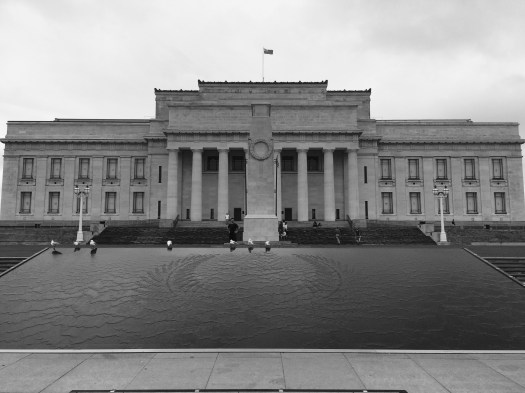
We flew into Aukland and stayed for 3 days. Although there is a bit of shopping, and nice bars and restaurants, I would actually suggest flying into Wellington first, which has a lot more to offer. We visited Aukland Museum, ate green lipped mussels by the harbour and wandered around the city, but mostly we used the time to catch up on work/washing/sleep because Aukland is so much like home.
FullSizeRender(15).jpg

Aukland → Rotorua (by bus)

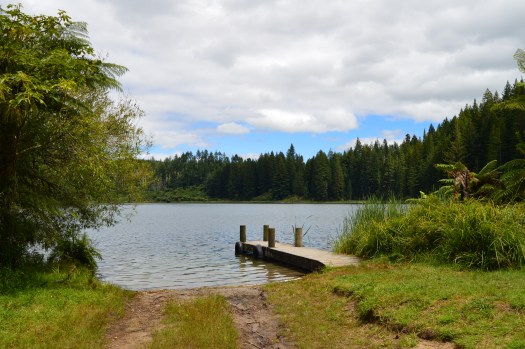
The first thing you will notice about Rotorua is the smell: Sulphur. Thanks to being built on volcanic soil, steaming geysers and exploding mud pools. Don’t let this put you off in any way, because there are some great things to do here. We ate at the Saturday market, recharged in the healing volcanic mud spas at Hell’s Gate and rode mountain bikes through Redwood Forest, stopping for a picnic at the sacred ‘Green Lake’.
DSC_0831.JPG

Rotorua → Taupo (by bus)

Taupo has a lively atmosphere compared with sleepy Rotorua, as well as beautiful rolling hills as far as the eye can see, one of the biggest lakes in NZ, famous day treks, the Waikato river and the staggering Huka Falls, which is a must-see. We stayed at the Huka Falls Resort; an array of romantic, well-equipped chalets overlooking a vineyard.

DSC_0876.JPG

Taupo → Queenstown (by plane via Aukland)

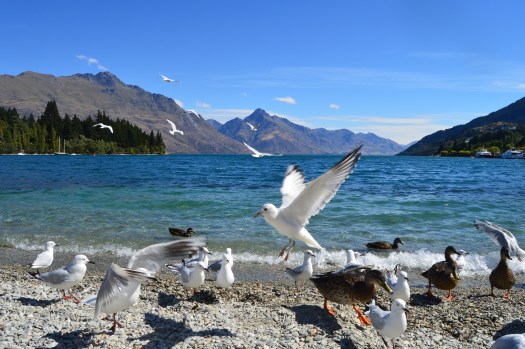
From Taupo, we took the bus back to Aukland and hopped on a plane down to Queenstown. Queenstown is a pretty special place, both in terms of looks and content. The views are like nothing else I’ve ever seen and there is SO much to do (if you have the cash). Annoyingly, we could only find vacancies in neighbouring Arrowtown, which is lovely, but a 30-60 minute bus ride (depending on the time of day) from where all the action is. Must-do things in Queenstown? Bite the bullet and do something truly memorable. We did a sky dive with NZONE and it was the most terrifying/exhilarating/emotionally demanding thing I’ve ever done. Rafting on the Shotover river was also amazing. Be sure to join the Fergburger queue after a few too many glasses of wine at one of the many bars. Just steer clear of the bar crawls if you want to avoid feeling like a pensioner.
DSC_0909.JPG

Queenstown → Te Anau (by bus)

You can do day trips to Milford Sound from Queenstown, but we chose to spend a night in Te Anau to break up the journey and experience a new place. Like most Idyllic places in the South island, Te Anau is built on a huge lake, has stunning mountain views and has some lovely walking trails. We took the 7am bus to Milford Sound the following day, which I can’t recommend enough. Think jagged mountain tops peering through low misty cloud, crystal waters, powerful waterfalls, unique rock formations, wild dolphins and seal lions and the wind in your hair as you sail through speechless.

DSC_0934.JPG

After Milford Sound (pictured below), as a Valentine’s Day bonus, Joe treated us to the most amazing ”Cathedral Room’ in Te Anau Lodge, a truly exquisite guest house, furnished with nothing but gorgeous antiques and framed with stained glass windows, which rounded off the day pretty nicely.

DSC_0959

Te Anau → Wanaka (by bus via Queenstown)

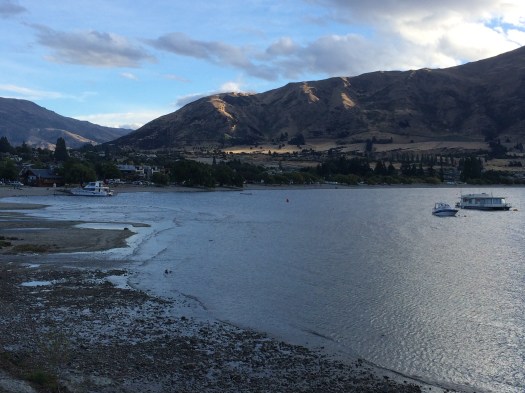
More great-quality restaurants overlooking a very pretty lake, Wanaka is small but definitely a worthy of a stopover. Unfortunately, our experience was a very rainy one, so I spent most of my time there glued to my laptop and eating instant noodles in a shared kitchen. I did manage to get one photo before the heavens opened.
IMG_3074

Wanaka → Franz Josef (by bus)

We had planned to visit Franz Josef to hike it’s famous glacier via helicopter ride, so you can imagine our frustration when all tours were cancelled and the walkway closed due to torrential rain. At least we were able to relax in the hot pools and enjoy some of the nightlife on offer.

IMG_3079

Franz Josef → Christchurch (bus and Alpine Crossing via Greymouth)

Wanting to make our way from West to East, we booked ourselves onto the TranzAlpine and took in the sights by train. It was pretty amazing actually. The scenery is unbelievable and you would never usually get to see so much in one go. The train travels fairly slowly and has a number of ‘viewing carriages’ without windows. Its a great opportunity to get some amazing photos and quite literally watch the world go by in all its glory.

DSC_1107

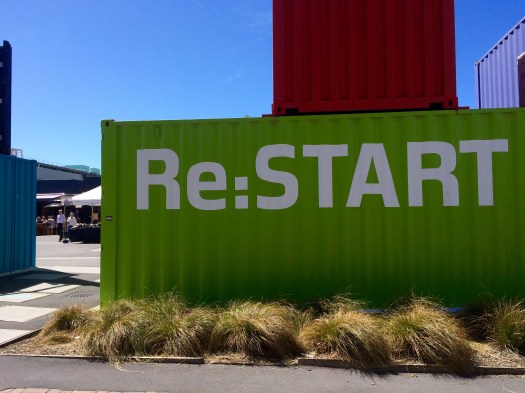
Christchurh famously suffered an incredibly damaging Earthquake in 2011 and the city is still rebuilding itself. Community spirit is rife and there is enough to keep you busy for a few days. We found a lovely flat on Air bnb and borrowed the owners’ bicycles to cycle to the botanical gardens, ate Lebanese kebabs at Re:Start (a collection of shops and foodstalls made from shipping containers), and relaxed on Sumner beach. I wouldn’t suggest traipsing the city by foot as everything is quite far apart.
FullSizeRender(17)

Christchurch → Kaikoura (by bus)

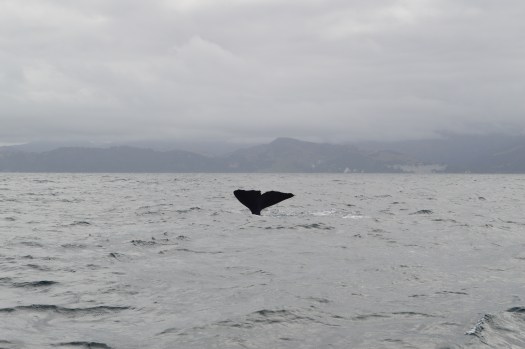
Another quaint little town, Kaikoura is known for it unique marine life and the opportunity to get up close to the native whales, dolphins, seals and sea birds. We saw 3 giant sperm whales, went swimming with hundreds of dusky dolphins, and caught many glimpses of the giant albatross. Literally incredible. A wonderful place to indulge in some seafood but most of the fun is out at sea.
DSC_1132.JPG

Kaikoura → Wellington  (by bus and ferry via Picton)

And finally, we ended our 3-week trip with 3 days in Wellington; New Zealand’s captital and the ‘cultural hub of the country’ as it likes to call itself. The are loads of great places to eat to suit every budget (thanks to the resident students) and a multitude of lively bars. We visited Te Papa, an impressive museum that hosts free exhibitions, saw a satirical play at the BATS theatre, spent the day at Zealandia (a huge conservation project dedicated to preserving New Zealand’s indigenous species) and ate street food at Cuba Street’s night market, stopping off at various points to drink good coffee and cheap gin and tonics.

FullSizeRender(16).jpg

So there you have it, my attempt to condense 3 weeks of New Zealand into a few measly paragraphs. NZ is wild and wonderful – an actual haven that’s begging to be explored by anyone, of any age, from anywhere. It is a truly unique place, so as long as you’ve sorted a roof over your head and you’ve got a couple of quid in your pocket, just get out there and make it your own.

Her Poetry: A Fatal Force

FullSizeRender(14)

Pure mountain rain is all it takes
To promise fatal force,
A trickle leaks from heightened stakes,
Rolls stealthily from the source.

It grows with every slippery bend,
Weaving in with murky pools,
It carries only clear blue sound,
Discarding matter cruel.

Driftwood’s tangled far behind,
So suck the jagged rocks,
Crushing cascade looming close,
A thousand lurching knots.

Our gentle lull becomes a sea,
Mutating with the hour,
Engulfing grass and river beds with
Exhilarating power.

Wilder still it catches wind
That everything will change,
A swirling vortex burrows down
And wipes away your name.

The ink is smudged and dripping now
In water colour, of course,
Out pours the fluid memory;
Out flows the fatal force.

20 things I’m glad I took travelling

FullSizeRender(6)

Since I’ve been away, I’ve had a few messages from people asking for travel-related advice, from which backpack to which bank card. I thought I’d share a few things I couldn’t live without right now. After the whole lost-luggage incident, I feel like I’ve got a pretty good grasp on what’s actually useful.

There are so many things I would tell past me whilst I was frantically trying to plan what to take. It’s bloody hard knowing what you’re going to need, particularly when you’re exploring different counties with opposing temperatures, contrasting terrains and different currencies. I couldn’t get my head around trying to pack for the sweltering heat of Thailand, the wilderness and mountains of New Zealand, and Spring-time city life in Japan – with many variations in between – all in a single backpack?! Traveller friends kept on at me: “don’t take too much, you’ll instantly regret it.” But how to know what the necessities are? In all honestly, you just don’t until you get there. And some of the time, you will rely on buying temporary seasonal adjustments you can throw away with each new country. But mostly, it is possible to take everything you need for most climates and activities all in one bag. The bag itself is also paramount to your planning of possessions, so I’ll start with that in my list of things I’m so very glad I took travelling:

1. A ZIP-AROUND BACKPACK

I am completely in love with my backpack. I knew I didn’t want a top-loading one, which requires removing every single item from a tiny opening just to find a clean pair of knickers. I wanted one that zipped all the way around like a suitcase, and chose the Osprey Porter 65. 65L is pretty big when you weigh 45kg but this backpack has ‘straight jacket’ fastenings across the front so that you can reduce the size and keep everything compact when it’s not full. It also has a million pockets, is super lightweight and really comfortable. The only downside is that you definitely look like a tortoise when you wear it because of the rounded shape, but I’m ok with that. Osprey Porter 65, £79.99 from Surfdome.com

2. A TRAVEL LAPTOP

FullSizeRender(12)

I am writing and blogging my way through my travels, so naturally I needed to take a laptop with me. Rather than risk losing my trusty old Macbook, I bought myself a HP Stream for about £125 on ebay. At 11.6 inches, it’s small and discreet enough carry around everywhere. The memory space is terrible, so I save photos externally, but in terms of just having a solid laptop to write with, is definitely does the job.

3. A SLEEPING BAG LINER

Being an unfortunate morning sniffler prone to puffy eyes, I am apparently allergic to pillows, or dust or something. I use my sleeping bag liner as a layer of protection to keep my allergies at bay but they’re also amazing for when you’re confronted with questionable sheets. It folds up really small and is breathable, too.

4. A DECENT TORCH

In Thailand and Gili T, we had few days and nights of no electricity. Having a good torch that was able to light the whole room was a life-saver. My Nan bought us ours from Wilko. Good old Nan. Good old Wilko.

5. A POWER BAR

And the same goes for the power bar. When faced with no electricity, we were still able to charge our phones. It’s also great if you’re going to be out in the wilderness and risk running out of battery. Just remember to keep it charged! Teknet PowerZen 2nd Gen, £20 from Amazon.co.uk

6. A MICROFIBRE TOWEL

I have actually lost my micro towel which I’m most upset about. It folds up really small and dries quickly – perfect as a backup. Most places seem to give out towels but I’ve found New Zealand to be a bit stingy on the towel front, often charging you to rent a shitty old towel. Better to have your own. Microfibre Quick-Drying Towel, £9.99 from Kathmandu.co.uk
7. A FIRST AID KIT

Another nifty present from my Nan, a little first aid kit can go a long way. Stock up on plasters, painkillers and antiseptic because you will undoubtedly need them at a time where there are no shops. I would take sun cream too as it’s often cheaper in the UK.

8. A MAGIC UNIQLO JACKET

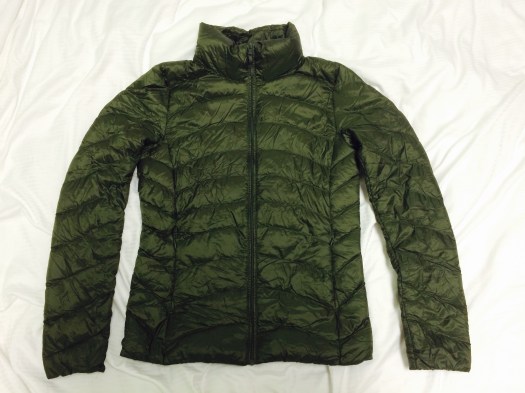
Have you seen those jackets in Uniqlo in all the colours of the rainbow? Well they fold into a tiny bag like a pac-a-mac, are water proof, lightweight and filled with down, making them really warm. My sister bought me one in khaki and it’s by far one of the most useful things I have. Perfect for an extra layer on chilly flights and overnight buses and for staying dry on boats and rainy days. Ultra Light Down Jacket, £59.99 from Uniqlo.com

FullSizeRender(13)

9. A TRAVEL WASHING LINE

Just a stretchy cord with hooks on each end. Genius when you’re forever washing swimwear and socks in the sink. Travel Clothes Line, £5.47 from Amazon.co.uk

10. A WATERPROOF PHONE POUCH

There may be times where you’re on a boat in rough seas, or you’re simply dancing in the rain. Invest in a waterproof pouch for your phone and money so you can be carefree about it. Dry Phone Waterproof Phone Pouch, £6.74 from Amazon.co.uk

11. PORTABLE SPEAKERS

I would avoid taking anything expensive, just in case. We took knock off Bose speakers  and they’re actually pretty good. I also made a shed-load of playlists on Spotify beforehand.

12. A GOOD CAMERA

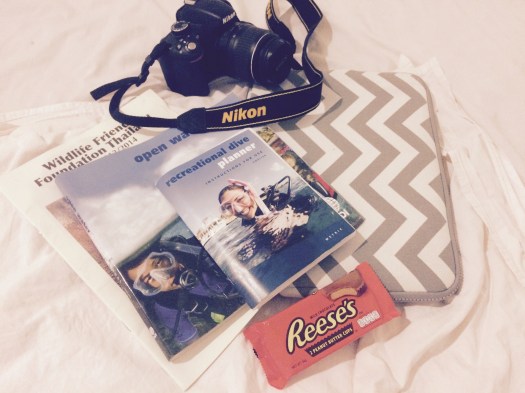
I can’t stress enough how much you will wish you had a decent camera once you reach your dream destinations. This is the trip of a lifetime. Invest in a camera that can do your memories justice for years to come. It’s risky, so be sure to backup photos as you go and insure all your equipment just in case. I have a Nikon 3200 and it’s a great option for anyone wanting decent shots that isn’t a pro.

FullSizeRender(7)

13. AN INDESTRUCTABLE WATCH

It doesn’t have to be an expensive one, I’ve just got a little gold Casio. But it’s waterproof and very resilient. I hate not knowing what the time is, especially when I’ve got pre-booked flights, ferries and buses to catch.

14. A FOLD-UP DAY BAG

I bought a Homdox packable backpack from Amazon and it’s so handy for when you need an extra bag. It completely folds into itself so takes up no space at all. It also fits loads in!

15. TRAINERS YOU ACTUALLY LIKE

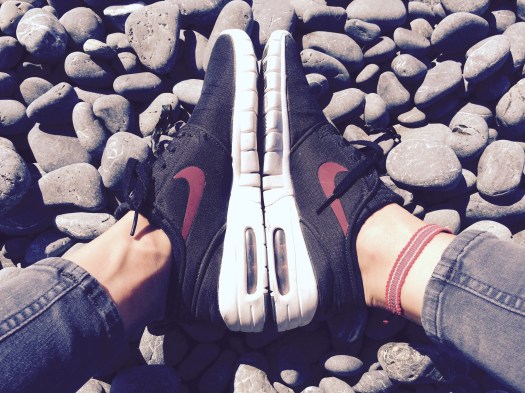
I was in two minds about whether to take old trainers or lovely new ones. I decided to treat myself to a pair of Nike Janoski Maxes because, to be honest, I’m going to be wearing them every day so better to start with a new pair, right? Plus they are nice enough to wear with all my clothes for pretty much any occasion so I don’t always feel like a tramp. And because I love them.

FullSizeRender(10)

16. BANK CARDS THAT WON’T CHARGE YOU

Without boring you all to tears, we decided to transferred all our money into a joint Santander 123 account. We also chose to have Halifax clarity credit card and a pre-paid card with a company called Resolut. The Halifax and Resolut cards are free to use aboard. We set up direct debits from the Santander account to pay off the Halifax and we top up the resolut card using an app on our phones as and when we need to. I would like to point out that this was Joe’s planning. I am hopeless with money and numbers. If in doubt, consult moneysavingexpert.com

17. DECENT DENIM

I’m so glad I took a good-quality pair of jeans and denim shorts (Topshop and Levis). I know they go with everything, are flattering and won’t go out of shape. They also require minimal washing. Light trousers and shorts are everywhere (and cheaper) in Asia.

18. PLENTY OF SWIMWEAR

This will probably be the thing you wear the most. It’s also the quickest thing to get ruined thanks to salt and chlorine, so take a good selection of swimwear.

19.INSECT REPELLENT WITH ‘DEET’

Well worth the extra couple of quid in Boots. We’ve found that, often, little corner shops in Asia only have crappy insect repellent that does nothing at all. It is so horrible being covered in bites, so check the ingredients for ‘deet’.

20. A KINDLE

FullSizeRender(11)

I love the romantic notion of travelling the globe with a pile of books under my arm, but in reality it just doesn’t work. You will suddenly find you have much more time to read, so treat yourself to a kindle and save some space in your bag. Alternatively you will find second hand book stores and book swaps in hostels.

If you are as clueless about travelling as I was a few months ago, I hope this post has enlightened you in some ways. Basically, try your hardest not to fill up your backpack with clothes (which, admittedly, I did do), and take it from someone who honestly believed she couldn’t live without them, you can, and you will.

Lost luggage and learning to let go

img_2983

One month into our travels, my absolute worst nightmare came true. After a 13-hour journey from Indonesia to New Zealand, we were the last people waiting at the luggage belt. That sinking feeling surged deeper and deeper into my stomach until airport staff told us all the bags had been unloaded. Mine wasn’t on the flight.

I can imagine this would be pretty upsetting for most people. Inconvenient at the very least. But for someone with OCD, who constantly fears the worst, it is absolute hell on Earth to have your fearful thoughts come to life. The gates of possibility to all the other terrible things that could happen are suddenly flung open. It is basically a horrible confirmation that you were right to worry, which is problematic when worrying doesn’t solve a thing. My mind went into overdrive trying to remember all the remain-calm techniques I’d learned in therapy, as I raced to the baggage claim desk.

‘Sue’ from Jet Star (don’t ever fly with Jet Star) was the most miserable cow in the whole of New Zealand. The conversation went something like this.

‘Do you know where my bag might be? Here’s the tag and flight number.’

‘No. Maybe it missed the connection. Leave your details and we’ll contact you tomorrow.’

‘I’m not leaving until you’ve traced my bag. That bag is my whole life right now.’

‘I’m calling security.’

And she called security on me, whilst I was having a panic attack. Fortunately the policeman got the wrong end of the stick and thought she had called him to help me. We eventually convinced her to contact Sydney airport some 3 hours later, who claimed my bag had got stuck on the luggage belt and should be with me in 24 hours. 24 hours of wearing Joe’s vests and pants was unappealing but do-able, so I forced myself to put the whole thing to one side.

The next day the airport called to say they hadn’t received confirmation from Sydney the bag had been found. It was dubbed ‘lost’. I felt numb, but I refused to panic. I calmly made a list of everything that was lost, had a little cry and carried on with the day. We drank bottles of beer in the sunshine and wandered up and down Queen Street buying a few bits. Later in the afternoon, Joe managed to track my bag online. The status had changed from ‘tracing’ to ‘arrived at airport’ and the relief of waking up from a bad dream swept through me. They had got it wrong. My bag was couriered to our hostel at 10pm that evening.

What struck me most about losing my bag was how quickly I accepted losing the clothes. It was the sentimental things that really upset me. The letters and photographs, the tickets I’d kept, the shells I’d collected, the notes I’d written. I was grief-stricken at the thought of losing those. But the clothes, which a month ago I would have held just as closely, I was ok with. And weirdly enough, the experience has made me feel less anxious in general. Because, basically, bad stuff is going to happen, and there is literally nothing you can do about it. If you want to be ok with it, you will be. Life goes on. And, of course, most of the time it could be a whole lot worse. Sometimes it’s important to give ourselves a shake and recognise just how fortunate we are that fairly trivial matters can seem so significant.

One of my aims of travelling is to feel less dependent on material things. And, although I still have quite a long way to go, this experience has brought me one step closer to where I want to be mentally. So actually, it turned out to be a positive thing. You never really know what’s good or bad until you allow time to take its course. It’s hard to put that into practice but it’s so important to remember.

I hope reading this encourages you to be patient if things aren’t going your way at the moment. If you are learning and growing, you are winning. It’s as simple as that.

Indonesia in rainy season: the ups and downs

DSC_0502

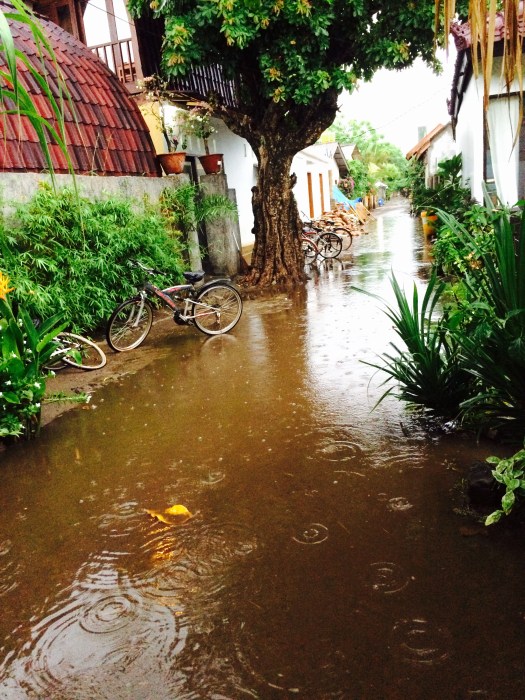
Going from Thailand’s sunny peak season to Indonesia’s predicted thunderstorms sounds like a terrible idea, I know. In some ways it was, but in many respects I’m glad we did it. Exploring Indonesia during the rainy season came with plenty of challenges, but because of the low points – like having no clean, dry clothes, or being unable to leave our clammy little rooms because of flooding, we were so grateful when the sunshine decided to make an appearance. One morning we even woke up at 5:45am, climbed a big hill and watched the sunrise, just to see the sun in all its glory. In Thailand I’d already started to take it for granted.

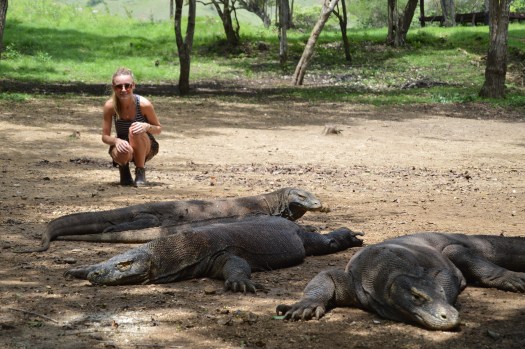
I guess we thought that after 3 weeks of sticky heat and sunburn in the land of smiles we wouldn’t mind the odd thunderstorm in the heart of the tropics. Well, we were wrong in some ways. We missed the promise of sunshine almost immediately. We’d taken blue skies away from the equation, doubled the stickiness and added flooding and thunder. Not exactly the change of pace we had in mind. We had no idea it was going to rain quite that much, which is a shame when you’re visiting Ubud’s beautiful Tegenungan waterfall (pictured above) or hitting the reggae bars in Gili T. In some ways however, rainy season is a great time to explore Indonesia. And if it had been sunny all the time, the temptation to do nothing but sun myself on the beach would have been all too great. Plus, we were still able to fulfil our dream of seeing Komodo dragons and trekking across Rinca island, so nothing was lost. Here are a few things we learned about visiting Bali, The Gili islands, Labuan Bajo and the Komodo region during the low season.

THE PROS

1. There is still sunshine, I promise
You will literally clap and cheer when it comes. It will generally either rain in the morning and brighten up, or the rain will come mid afternoon after a morning of sun. Plus it’s still hot, so your wardrobe is exactly the same, with the small factor of wearing a very stylish waterproof poncho on top.

DSC_0585

2. Low season means fewer tourists…
…and fewer tourists means cheap accommodation, less crowded attractions, better chances of seeing the wildlife and the opportunity to get to know the locals.

DSC_0703

3. You can party all year round in Gili T
There just tends to be one or two bars that everyone goes to depending on the night. The narrow streets aren’t full of drunk people, either.

4. Scuba diving trips are quieter…
…so you get a much more personal service. You can pretty much dive in any weather in Gili T because the dive sites are so close to the island. January/February time is also a great time for spotting the most marine life diving and snorkelling in Komodo. We were lucky enough to dive with 6m-wide manta rays (unbelievable), sharks, turtles and hundreds and hundreds of fish.

IMG_2441

5. You can still get a boat from Labuan Bajo to see the Komodo dragons!
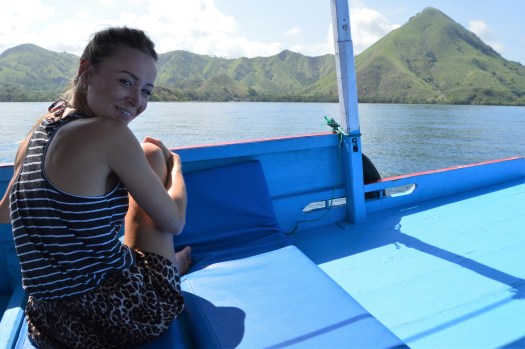
When we booked our flight from Bali to Labuan Bajo, we thought our chances of getting a boat were slim, but as long as the seas aren’t too rough (and it’s down to you to judge) then there will be a captain willing to take you. The boat journey from Labuan Bajo to Rinca takes 2 hours (4 to Komodo) and is very sheltered by the many (staggeringly beautiful) neighbouring islands. I wouldn’t recommend taking the boat from Lombok, which is pretty much open sea and likely to be very rough and actually quite risky. Boats have been known to sink on this route in the past!

DSC_0648

THE CONS

1. Rough seas
Admittedly, some boat journeys were petty hairy. If you’re prone to seasickness or don’t fancy the idea of being on a little wooden boat in the rain, then maybe steer clear. Choose your boat wisely, especially if you’re diving in Komdo. Some dive sites will be off limits due to strong currents, but generally a bit of current means more fish and more fish means a higher chance of seeing sharks and mantas.

DSC_0625

2. You might be without electricity…
…and worst of all, WiFi. Most bars and restaurants will have generators just in case but it can be very annoying if your accommodation doesn’t. I’m so glad we took a good torch, and a power bar to charge our phones, but it feels pretty good just to embrace it.

IMG_2405

3. Say goodbye to your tan
It’s a sad fact of life that that hard-earned tan is likely to disappear when your sunbathing hours are limited.

4. You will dream of having dry feet
It’s far too hot for wellies, so your poor little feet will endure vast muddy puddles in nothing but trusty havaianas.

FullSizeRender(4)

5. It is quite hard work (kind of)
Add all the above together with lugging your huge backpack around in the rain, being stranded in the middle of nowhere on your moped whilst it floods, worrying incessantly about the safety of your phone/camera/laptop and being forced to eat at the nearest rather than the best places, and you get the gist. It was pretty fun though.

FullSizeRender(5)

I don’t regret exploring Indonesia in the rain, as much as I’ve always had a great time at water-logged British festivals. It was fun, a bit silly and I have so many memories of our hilarious hardships. No two days were the same. However, for future reference, I’m pretty sure we’ll appreciate the sun in peak season next time we visit.