Lesson 28: hoarding the past

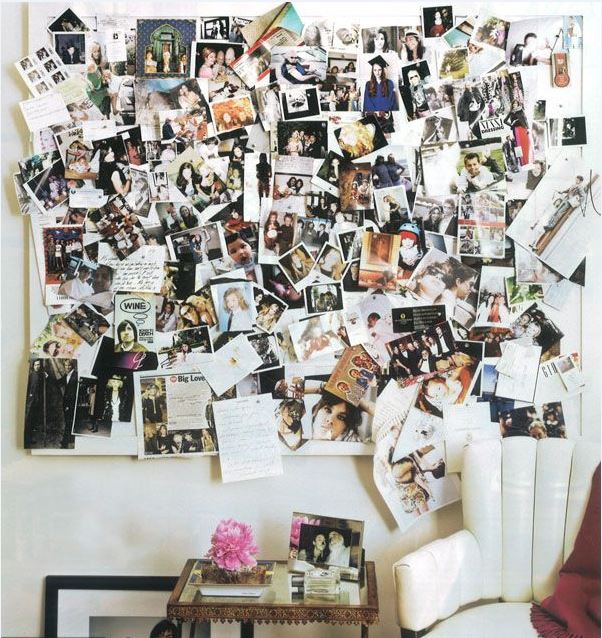
photo callage

If, like me, you’re a hoarder, you’ll understand the excruciating pain I was in when I had to throw away loads of stuff because of the damp in our stupid flat. Amongst the wreckage: Zara heels I’d worn once, trusty worn-out Kurt Geiger sandals and a pair of Jones Bootmaker brogues I wore everyday at uni and not once since. I have moved house four times since I graduated four years ago, and I’ve  taken these old brogues with me every time. The Zara heels I quickly got over, the Kurt Geigers I mourned and thought about constantly for a couple of days, but the brogues I never wore… I actually found throwing these away really hard. I felt sad and guilty, like I was letting go of some tiny piece of a past life. I’m not sure I’m particularly materialistic, just ridiculously sentimental.

It fascinates me how much we assimilate meaning from objects that have no purpose. They were just sitting there, collecting dust (and mould, apparently), and somehow they posed as an unlikely comfort, a reminder of the everyday stuff that often becomes lost. I seem to attach this sort of meaning to pretty much everything. It extends beyond the whole ‘I might need it one day’ philosophy. Half the stuff I keep I know I will never need. So why do I do it?

Fear. It’s as simple as that. Fear of forgetting the past, of forgetting a crucial part of the journey, of forgetting a piece of my history, or of someone else’s. All the time I’m hoarding things, I’m subconsciously living in fear.

Perhaps this is why I often dream that my house is on fire and I have to choose what to save, or why I have an irrational fear of being burgled, or why I take a photograph at every opportunity. The truth is, when you have too many belongings, or put too much pressure on yourself to capture and retain every moment, you lose sight of what is really significant to you. Your physical space is crowded and mixed up, and your brain does exactly the same. Tidy room, tidy mind. It’s so true. Your space eventually becomes too full for anything new, and you end up sacrificing your future trying to save your past.

Although it was horrible throwing my beloved brogues away, it was also quite liberating to have faced my fear. When we’re forced to live without something, or do things a little differently, we often end up wondering what we were so afraid of. Change is necessary for moving forward. Everything has to keep moving, whether we like it or not, so better to embrace it than attempt to dwell in the past via mouldy old shoes.

In the ever-evolving consumer culture we live in, it’s ALWAYS necessary to question how much shit we actually need. One of the easiest ways to stop accumulating too much stuff is (believe it or not) to stop buying so much stuff in the first place. Like any addiction, constantly buying things only leaves you wanting more. It’s a cruel trick. A hunger that’s never satisfied. I guess what I’m trying to say is that the happiness we think we get from material things is incredibly short-lived. We are too fickle for our own good. It stems from a constant stream of consciousness that tells us to focus on the things we don’t have, ignoring the things we’ve already got. Similarly, my fear of losing my possessions depends on the idea of absence. Forever focusing on the absence of material things, aligning our happiness with their presence, is simply not healthy or practical. And the truth of the matter is, while you probably don’t need another pair of shoes, someone out there really, really does. Someone out there, lots of people in fact, don’t own any shoes. So what makes you think you need another pair? Or that you can’t live without one of your 30?

Yesterday, I visited my nan, who’s preparing to move out of her three-bedroom house and into a little flat. She wanted my sister and I to ‘choose some things to keep’, and together we went through a big pile of potential ‘things’ my nan was happy to part with. Glassware, tea sets, ornaments, cutlery, pottery, jewellery, ash trays, photo frames. Everything had a story, and yet she was willing to let them go, if not to us then to charity. She made the brave decision to sacrifice a few pieces from the past to make some space for the future, moving forward and embracing a huge change. I will forever take my inspiration from that. The useless brogues (among other things) I threw away left more than enough space for a few things from my nan I will forever, rightfully hold close.
 

Lesson 25: believing in yourself

deab49a48bad2fdd070d8305919c86fe

The trick?
Believe in yourself,
But don’t believe everything you think.

As some of you might know, I’m currently receiving CBT (Cognitive Behavioural Therapy). It’s not something I’m at all ashamed of, so I don’t mind touching on it from time to time. I find it all quite fascinating. I’m not cleanliness-obsessed and I don’t struggle to go about my day if things aren’t arranged a certain way, but I’ve been diagnosed with OCD based on the way I interpret things.

Everyone has weird thoughts from time to time. Like, really weird. Thoughts that make you think ‘where the bloody hell did THAT come from?’ They might be angry, inappropriate, sad, sexual, scary, hopeful, or just plain mental. Thoughts that have the potential to trigger an emotional response. It wasn’t until I started having CBT that I realised just how much meaning I was applying to these unplanned, intrusive imaginings. The more meaning I applied, the scarier and scarier they turned, and the line between my thoughts and reality started to blur. I felt like I was having premonitions, jumping to the worse-case scenario at the tiniest things. I thought I had just developed some sort of anxiety disorder out of nowhere, when really I had let the controlling OCD voice in my head get too loud. It’s very similar to the one that says ‘don’t walk under a ladder, it’s bad luck’, only more exaggerated: ‘don’t open the front door, someone will murder you with an axe.’ When you actually start believing that voice, it is terrifying, let me tell you.

The worse thing about OCD is that it feels like a comfort, like something is keeping you safe and allowing you to have full control of a situation. When in reality, it’s controlling you. So many mental afflictions provoke the same response – trying to claim complete control over your mind and body, only to find that the illness dictates everything you do, robbing you of any autonomy.

At first I felt quite guilty receiving the therapy. I’m not that bad, I thought. And I’m not, but week after week I’ve been confronted with just how much belief I’ve had in the power of my imagination. Last month at work, I was told I would find out on 22nd July whether I would be promoted. On 15th July in therapy, I was asked to write this on a piece of paper:

‘Something bad will happen this week.’

It sounds ridiculous, but I felt so angry with the therapist for ‘tempting fate’ the week before my potential promotion. I convinced myself it wouldn’t happen, and that some other awful thing would happen that week as well. Interestingly enough, the people I’ve shared this story with, who don’t have OCD, have said they would also have struggled to write this down for fear of it coming true. It’s exaggerated superstition; a personal religion that sometimes gets out of hand. It’s as old as humanity itself.

On 22nd July, I’m incredibly pleased to say I was promoted to Senior Writer at The White Company. I don’t know what made me happier and more relieved; the promotion or the fact the therapist was right – my thoughts really do have no effect on reality. It’s an easy, uplifting lesson to have learned. The real test would have been if the promotion hadn’t happened – to then learn to accept that what I wrote on a piece of paper was completely unrelated, just an unfortunate coincidence.

The way I see it, I’m pretty lucky to have been given the opportunity to learn more about how the brain works and fine-tune my thoughts with the help of an expert. As much as we all like to moan about the NHS, it’s actually kind of amazing that CBT is a free service to people who need it, despite the lengthy waiting list. If you feel like this might be something you’d benefit from, ask your doctor to refer you and don’t be ashamed to speak up.

I feel so much more relaxed simply letting the things beyond my control happen. It’s liberating. More to the point, I hope the fact I’ve been able to carry on as normal – continuing to work hard and be sociable despite feeling constantly anxious – encourages other people to believe in themselves no matter what. Ignore the negative thoughts and power-on through. Good or bad things won’t happen because we will them to with our minds. The mind is a powerful thing, but the only thing it can control is your thoughts. The rest is up to you.


Her Poetry: Cracks

cracks2

The cracks and gaps in the pavement,

Don’t tread on them or you’ll break,

That little voice in your scurrying mind,

It told you not to tempt fate.

Your body will split down the centre,

Casting half of you here and half of you there,

With your heart in the dirt,

And your brain in the air.

Each bone will snap and litter the ground,

If you admit that those cracks are there.

Lesson 18: feeling normal

d871bb05e6d8c586d49d50cf8f9a5712

Growing up can be a lonely experience. Gradually, it becomes more and more inappropriate to share our weird and wonderful traits with people the way we might have at school or uni. We become more proper and more private with age. Having touched on mental health issues and with it being Mental Health Awareness week, I’ve been thinking about the things that put us at ease, starting with confession. After I posted about my anxiety, I received so many lovely, reassuring messages from people simply saying ‘hey, I feel like that too sometimes’. So not only was confessing to receiving CBT a way of unloading my issues, it seemed to benefit other people just as much to hear it. One of the most heart-warming things we can experience is a collective emotion. Connecting with people about a negative experience often equates to a positive outcome. For this reason, I’ve decided to list all the ‘abnormal’ things I do but wouldn’t usually talk about. Chances are I’m not alone in doing them, and it might make you feel less lonely too.

  1. Very few people know this about me, but I have trichotillomania. Without meaning to or really realising, I compulsively pull out my own hair when I’m tired or nervous. It’s generally my eyelashes but often my eyebrows and the hairs from my head as well. You know that satisfying feeling of picking off clumpy old mascara? Usually, it’s just that. But when I’m a feeling a bit anxious, it leads to physical pulling. It’s no different to biting your nails or cracking your knuckles, and yet nobody really talks about it. We all have weird bodily impulses from time to time. It’s absolutely nothing to be ashamed of.
  1. I have a tendency to conjure up the worst-case scenario in my head. If someone is knocking at the door, it’s never the postman, it’s a burglar. I catch myself physically hiding from the postman. Which sounds funny now, but it’s not exactly ‘normal’.
  1. I have days where I hate the way I look more than anything else on Earth. I have a strong belief that 99% of people do. Everyone thinks other people are so happy and comfortable with themselves, when really we’re all intimidated by each other. People with straight hair would do anything for natural waves and people with curly hair gaze wistfully at poker-straight locks. We all want what we can’t have and we all choose to see people the way we want to. Just remember, nobody is as critical of you as you. Nobody notices the spots you obsess over, or the fact you’ve worn the same shoes every day for two weeks. People tend to focus on the things you have that they want.
  1. My boyfriend and I practically have a language of our own, speaking in weird voices with even weirder made-up words. If anyone ever overheard us they would probably mistake us for aliens. Or think we’ve been exposed to vast amounts of radiation. We also dance around the kitchen far more than is necessary.
  1. I never, ever wash my duvet cover once a week. Life is too short for that nonsense. However, anything less than once a month is nothing to be proud of. For someone with OCD tendencies, I never obsess over cleanliness. Not showering at a four-day festival is something I welcome with open arms. Gross, I know.
  1. I look back at old photos of myself on Facebook and Instagram and try to imagine them from other people’s point of view. Have I got better or worse with age? Were my eyebrows really that bad? Was I that uncool? Or that drunk? The truth is, of course, nobody cares.
  1. I sometimes convince myself that people are annoyed with me for no apparent reason. They only put one kiss at the end of a text, they forgot my birthday, they didn’t go to an event I organised. In reality, they were in a rush, forgot the date and had 10 other things to do that day.
  1. I feel anxious speaking on the phone. I’ve never really enjoyed ridiculously long phone calls and tend to let my phone go to answer phone when someone rings me out of the blue. I have to be in the right frame of mind for a phone call, whoever it is. I usually tell myself off and ring people back straight away, but my natural reaction is to ignore my phone. God knows why.
  1. I used to have a weird obsession with balancing out food groups. No carb-on-carb or meat-on-meat action for example. Rice in a wrap or a bacon AND sausage bap were literally my worst nightmare. I also know how many calories are in almost everything, even though I don’t calorie count.
  1. I can’t throw things away. My sister once asked why I’d kept one earring after I’d lost the other one, to which I replied ‘I might need it one day’. I’m overly sentimental and have boxes and boxes of ‘memories’. I’m paranoid I’ll forget or lose something import. Joe is the complete opposite. I don’t think he owns a single photograph and that panics me slightly. He says all his memories are in his head. The irony is that I’m incredibly scatty and constantly misplace everything I own. I’ve never had the same phone for longer than a year.

Although it’s important not to let your struggles become your sole identity, I hope my weird confessions encourage you to embrace what makes you you. I would love to know if you can relate to any of the above. Who wants to be normal anyway?


Her Poetry: OCD

OCD

OCD

Sometimes I look in the mirror

And don’t like what I see

My external self is so changeable

Yet I’ve looked the same since I called myself me


The difficulty I have

Isn’t with the skin, hair and teeth

It’s with my unchanging attitude;

My need to perfect and be perfect.


I’m doing it now as I write this

Criticising the way that I think

If it’s in me to scrutinize, to poke and to sneer

Then I guess I’m just trying to make myself clear


By failing to accept my flaws

I’m simply staying true to myself

Embracing the part that rejects the imperfections

And scathing all that’s imperfect.